
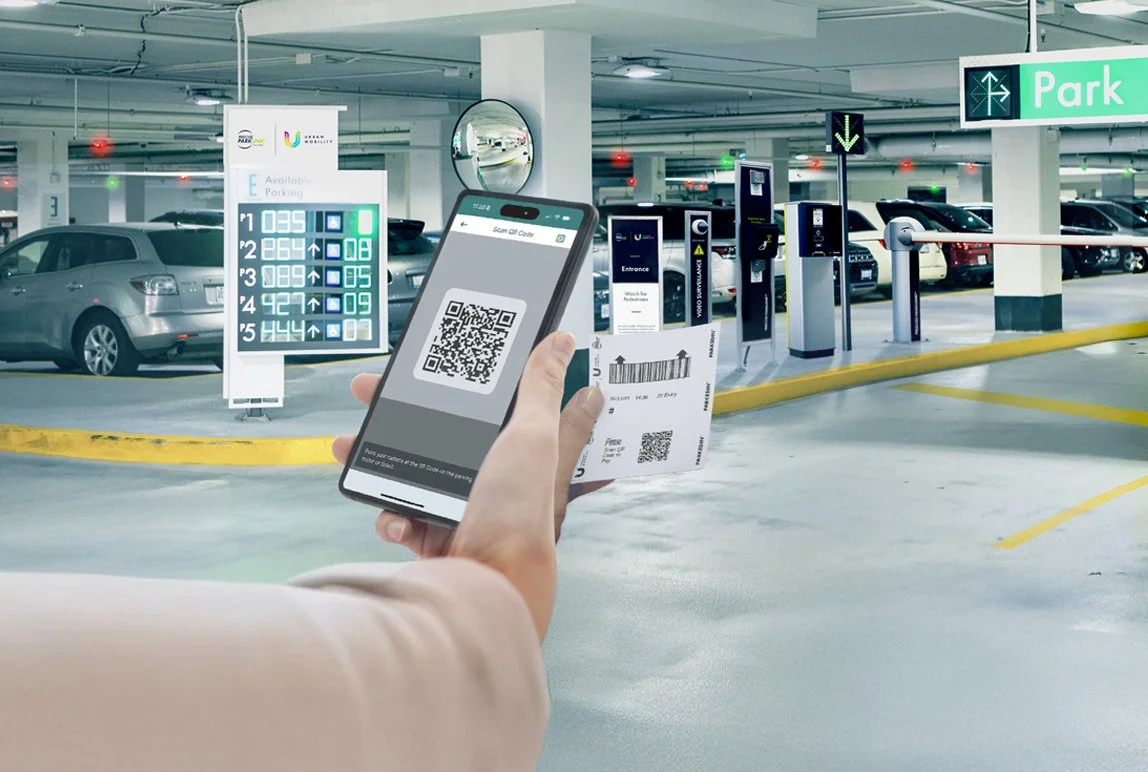
Parking isn’t only an operational function. It’s a signal of how well a property is run.
As expectations across industries continue to evolve, driven by mobile-first and on-demand experiences, parking is being held to the same standard as banking, retail, and transportation. Users want it to be fast and intuitive, without confusion and the need to wait. What used to be acceptable — manual processes, unclear systems, and hardware dependency — now stands out as inefficient, outdated, and disconnected from how people actually move through the world today.
Digital parking experiences are more than a “nice to have.” They are quickly becoming the baseline for modern parking operations and a core component of effective parking management systems.
Drivers now expect to check availability before arriving, pay and manage sessions from their phone, extend time remotely without returning to their vehicle, receive instant confirmations, and access permits and EV charging in one place.
Imagine arriving at a property where everything works. You know where to go before you arrive. Entry is clear. Payment takes seconds. You don’t think about parking again until you leave.
Now imagine the opposite. You circle for a space due to unclear signage. The pay station isn’t working. You’re left guessing about pricing or whether you’ve even paid correctly.
That difference is no longer minor — it defines the entire experience.
Whether a driver is managing a parking permit, completing a mobile payment, or accessing EV charging, the expectation is simple: the experience should be seamless, reliable, and on-demand. For facility owners and managers, this shift carries real operational weight. Digital parking solutions are not just about convenience — they directly impact:
Operational efficiency and staffing demands
Revenue performance and leakage prevention
Customer satisfaction and retention
Overall property perception
In this article, we break down what digital parking experiences look like in practice, why they matter for operators today, and how forward-thinking facilities are using them to create more efficient, connected, and scalable operations.
Changing Expectations for Parking
Parking is often the first and last interaction a visitor has with a property. That positioning makes it more than operational — it shapes perception before a visitor even walks through the door, and it lingers after they leave. A smooth, intuitive parking experience sets the tone, while a frustrating experience can carry through the visit and beyond.
Parking Sets the First and Last Impression
When a driver arrives and everything works — guidance is clear, entry is simple, payment is easy — confidence in the property rises immediately.
In practice, this shows up as:
Clear wayfinding vs. confusion at entry
Fast payment vs. waiting at a pay station
Transparent pricing vs. uncertainty and second-guessing
A welcoming environment vs. a transactional one
In competitive environments, especially across commercial real estate, these moments matter. Tenants and visitors have choices. A parking experience that consistently and successfully delivers reinforces the overall value of the property and supports retention over time.
Shift to Mobile-First Behaviour
Consumer behaviour has already changed. People manage banking, transit, food delivery, and rideshare from their phones — quickly, with full visibility, and on their own terms. Parking is now expected to operate the same way. Drivers expect to check availability before arriving, pay without using a physical machine, extend sessions remotely, access receipts instantly, and manage permits and services all in one place.
This isn’t just preference — it’s a shift toward self-service and control via mobile-first parking.
User Demand for Frictionless Experiences
The standard today is speed, clarity, and convenience. Users don’t remember what works well — only what slows them down. Friction in parking typically shows up as long queues at pay stations, unclear instructions or inconsistent signage, hardware that fails or requires maintenance, and disconnected systems that don’t communicate with each other.
The goal isn’t to remove physical infrastructure entirely. It’s to reduce reliance on it and ensure digital tools enhance what’s already in place with seamless integration. Pay stations, access gates, and on-site staff still play important roles, particularly for visitors who are less comfortable with mobile technology or when systems need backup.
Strong operations balance digital tools for speed and visibility with physical systems for accessibility and backup, supported by on-site staff when it’s needed.
This is where many facilities are today — navigating the shift from traditional systems to more connected, digital-first operations. The difference between keeping up and falling behind often comes down to how intentionally that transition is managed.
How Digital Parking Supports Operators and Parking Management Systems
Digital parking experiences are not just about improving the visitor experience. For operators, modern parking management systems and digital parking solutions fundamentally change how parking is managed, optimized, and scaled.
Improved Operational Efficiency
One of the most immediate impacts of digital parking is a shift away from complete reliance on physical infrastructure, with key functions increasingly supported by digital tools. As digital systems automate core functions like payment, access, and session management, operations become more predictable, scalable, and less dependent on staffing variability.
In practice, this means less time handling cash, more consistent day-to-day operations, and more time for staff to focus on enforcement and customer support.
Enhanced Revenue Management and Parking Revenue Optimization
Digital platforms give operators more control over how revenue is captured and optimized. Pricing can be adjusted based on site, demand, time of day, or usage patterns. This allows operators to adjust pricing in real time, capture revenue during peak demand, stay competitive during slower periods, and reduce common issues like drivers tailgating out of gates to avoid paying. Every session, payment, and permit is recorded, creating a level of visibility that makes it easier to identify gaps and improve performance over time.
Data-Driven Decision Making and Parking Data Analytics
Modern digital parking systems generate a continuous stream of operational data, forming the foundation of effective parking data analytics and giving operators a clearer understanding of how their facilities perform. Occupancy trends, peak usage periods, turnover rates, and payment patterns all become visible when parking is managed digitally, providing a clearer view of where performance is strong and where improvements can be made.
For operators overseeing multiple locations, this data becomes even more valuable. Portfolio-level reporting allows for comparisons across sites, highlights outliers, and supports more informed decisions around staffing, pricing, and infrastructure investment. Instead of relying on assumptions or periodic reviews, operators can make decisions based on real-time data and consistent, system-wide visibility.
Streamlined Customer Support
Parking disputes are inevitable. But digital systems make them easier to manage. With every transaction recorded, operators have clear, time-stamped records to reference, resulting in faster adjudication, more accurate responses to customer inquiries, and reduced back-and-forth between staff and users. At the same time, digital communication tools — like automated receipts, notifications, and alerts — reduce the need for manual intervention and improve overall transparency for users.
Scalability Across Portfolios
For operators managing multiple locations, digital systems create consistency and control at scale. For facility owners and managers overseeing multiple locations, this becomes a significant operational advantage.
With centralized platforms, operators can:
Adjust pricing across multiple sites remotely
Deploy updates without on-site intervention
Monitor performance from a single dashboard
Maintain a consistent experience across locations
Changes that would have previously required on-site visits or individual configuration can now be made remotely and applied uniformly across all locations.
This is especially valuable for large or complex portfolios — including airports, healthcare facilities, mixed-use developments, and institutional properties — where consistency of experience and reporting is a priority. Digital infrastructure enables operators to maintain high standards across all locations without a proportional increase in operational overhead.
What Defines a Strong Digital Parking Experience
Not all digital parking experiences are equal. The technology itself matters, but how it is implemented and experienced matters more.
Mobile App Functionality
A well-designed mobile experience is the foundation of digital parking. At a minimum, users should be able to find parking, start and extend sessions, make payments, and receive confirmations — all from their phone.
Strong mobile functionality typically includes:
Real-time availability and location access
Session start, extension, and management
Secure digital payments
Notifications and reminders
Permit and subscription management
Integration with EV charging and validation systems
Each feature reduces friction and eliminates unnecessary steps in the user journey.
The Value of a Seamless User Journey
Of course, the transition isn’t always seamless. Older hardware can resist integration, and there will always be users who prefer tickets over apps. But this is exactly where modern digital parking systems step in — not just identifying these gaps, but solving them with systems that bridge both worlds.
The value of a digital parking experience is ultimately defined by how it feels to the user. When the experience is intuitive, fast, and predictable, it directly translates into higher satisfaction, stronger trust, and better overall perception of the property.
A strong parking experience minimizes effort from the user, with each step — from arrival to exit — feeling intuitive and uninterrupted.
In practice, that shows up as:
Clear entry and guidance into the facility
Fast and simple payment experiences
Easy session management without returning to the vehicle
Smooth exit without delays or confusion
This is where digital systems create real value. When tools are connected and designed intentionally, they remove friction at every touchpoint, turning parking from a transactional moment into a seamless part of the overall experience.
Real-Time Visibility
Access to real-time information improves decision-making for both users and operators. For users, this means being able to see availability before entering, understand pricing upfront, and track their session in real time. For operators, it means monitoring occupancy and usage patterns, tracking transactions as they happen, and identifying and resolving issues quickly. Visibility reduces uncertainty and creates a more controlled, efficient environment for everyone involved.
Consistency Across Locations
For multi-site operators, consistency is a key part of the experience. Users should not have to relearn the system every time they visit a new location. In practice, this looks like familiar interfaces across properties, standardized payment methods, and clear, predictable processes. Over time, this consistency builds trust and reduces friction for returning users.
Accessibility and Inclusivity
A strong digital parking experience works for all users, not just those who are comfortable with technology. This includes clear instructions and intuitive design, multilingual support where needed, and options for users who prefer or require physical systems. Digital systems should enhance accessibility, not limit it, and the best experiences account for a wide range of user needs to ensure no one is left behind.
Where Digital Parking and Smart Parking Technology is Heading
The shift to digital parking is already underway, but the direction is becoming clearer: more connected systems, more personalized experiences, and a stronger role within the broader mobility ecosystem.
Deeper Integration with Mobility Ecosystems
Parking is no longer an isolated endpoint within modern parking operations. It is increasingly part of a connected journey that includes transit systems, EV charging networks, rideshare platforms, and multimodal applications. As these systems become more integrated, parking facilities are evolving into connected hubs that support how people move through cities.
For operators, this creates measurable value. Facilities that integrate with transit, offer EV charging alongside standard parking, and connect with journey-planning tools become more useful, more flexible, and better aligned with how users plan their day.
Personalization Through Data
As digital platforms mature, the ability to personalize the parking experience continues to expand. Data allows systems to recognize returning users, adapt to preferences, and reduce friction over time.
This can show up as saved payment methods, preferred locations, typical session lengths, and timely notifications. It also enables more targeted communication, such as reminders for permit renewals or alerts when sessions are ending. These small, consistent improvements contribute to a stronger sense of reliability and trust for users.
Contactless Parking and Automated Environments
Contactless parking is becoming more achievable through smart parking technology such as License Plate Recognition (LPR). These systems enable both gated and open parking environments, reducing the need for physical interaction at entry and exit points.
As adoption increases, the impact is both experiential and operational. Users benefit from faster, uninterrupted access, while operators reduce queues, minimize hardware at access points, and streamline enforcement. The result is a more efficient, lower-maintenance operating model.
Increased Focus on User Experience Design
As digital tools become more common, the quality of the experience itself is becoming the differentiator. Technology alone is no longer enough — how it is designed and delivered is what sets operators apart.
Simplicity and reliability matter most. Systems that work consistently, without confusion or delays, build trust quickly. Over time, that trust becomes part of the property’s overall value.
Sustainability and Smart City Alignment
Digital parking and smart parking technology also play a role in broader sustainability efforts. Systems that guide drivers to available spaces reduce circling and idling, which in turn lowers emissions within and around facilities. Real-time occupancy data can also inform planning decisions, helping operators and cities better understand demand and allocate resources more effectively. As smart city initiatives continue to expand, digitally enabled parking systems are better positioned to contribute to those long-term goals.
What This Means for Parking Operators
Digital parking is more than a luxury. It’s the baseline. Without it, operations start to fall behind — not just in technology, but in how users experience the property. The shift is already happening. Expectations are higher. Systems are more connected. And the gap between facilities that adapt and those that don’t is getting wider.
We see it every day: the operators who invest in connected, user-focused digital parking solutions aren’t just improving operations — they’re building systems that scale, adapt, and hold up under pressure. A strong digital parking experience isn’t just about technology. It’s about making parking work the way people expect it to.
That’s what defines the properties that stand out.
References
Parking sensors: Urban efficiency and sustainability - urbiotica. (n.d.). https://urbiotica.com/us/blog/parking-sensors-urban-efficiency-and-sustainability/
Rysak, M. (2023, November 5). Sustainable parking: How to design & operate eco-friendly parking facilities. International Parking & Mobility Institute. https://www.parking-mobility.org/blog/sustainable-parking-how-to-design-operate-eco-friendly-parking-facilities/
/ Gouvernement du Canada. (2025, September 16). Government of Canada. Canada.ca. https://www.canada.ca/en/treasury-board-secretariat/services/innovation/greening-government/strategy.html
Parking Industry. (2025, November 10). How sustainable parking boosts your bottom line. https://www.parkingindustry.ca/feature-articles/how-sustainable-parking-boosts-your-bottom-line
Henry, T. (2025, December 8). From deficit to data to decarbonization. Parking & Mobility. https://parking-mobility-magazine.org/december-2025-breaking-boundaries/from-deficit-to-data-to-decarbonization/
BOMA Toronto. (2026, February 11). How to fund decarbonization projects. Building Owners & Managers Association of the Greater Toronto Area. https://www.bomatoronto.org/boma-events/event-description?CalendarEventKey=65d8c85a-46f8-46ed-85f3-019a35bee7c5&Home=%2Fboma-events%2Fbomacalendar
Parking Industry. (2025a, August 15). The Parking & Mobility Industry’s role in Canada’s Net Zero Emissions Commitment. https://www.parkingindustry.ca/parking-management/the-parking-mobility-industrys-role-in-canadas-net-zero-emissions-commitment
SWPTA. (2025b, October 2). Top 5 sustainable parking trends for a greener future. https://www.southwestparking.org/blog/driving-sustainability-transforming-parking-practices